
By TNREDITOR
23 Nov, 2025
A tire (American English) or tyre (British English) is a ring-shaped component that surrounds a wheel’s rim to transfer a vehicle’s load from the axle through the wheel to the ground and to provide traction on the surface over which the wheel travels. Most tires, such as those for automobiles and bicycles, are pneumatically inflated structures, which also provide a flexible cushion that absorbs shock as the tire rolls over rough features on the surface.
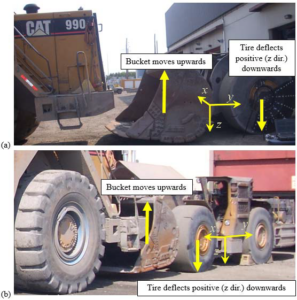
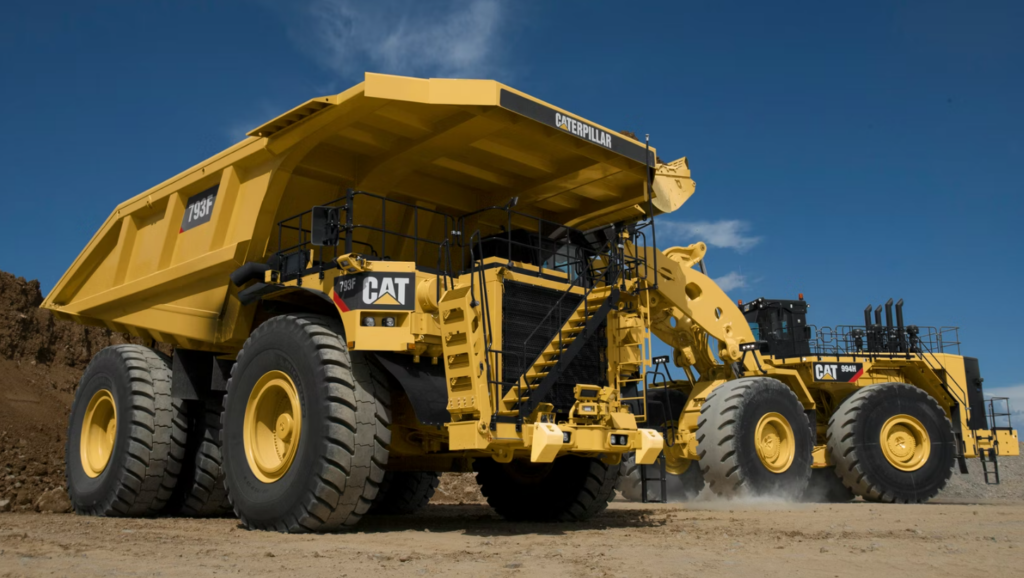
Learn More →The ability of a tire to carry large loads is of significant importance in the design of haul truck and loader tires. The way a tire carries a load is more complex than a simple model of the air pressure alone supporting the load.
When no load is applied to the tire, the air pressure exerts an equal amount of pressure and force on the inside of the tire, so the resultant force is zero. When a load is applied to a tire, it must be transferred through the rim, bead, sidewall and belt before being balanced through the surface contact area with the ground. When a load is applied to a tire, the load must be transferred between the rim, bead, sidewall and belt before it can be balanced on the ground contact patch.
Acceleration and braking require the transfer of engine and brake torque. Engine and braking torque is transmitted through friction between the tire tread and the ground.
Aother important function of the tire is to allow the operator to change/maintain direction. The tire tread provides traction and the ground provides friction. Friction prevents the tire from sliding side to side, forcing the tire to roll in the direction of the steering. The strength and air pressure of the sidewall prevents the tire from collapsing when lateral forces are applied to the tire through steering.
The tire needs to be deformed to adjust the contact area to achieve the purpose of auxiliary shock absorption. When a haul truck or other vehicle bounces due to uneven terrain, the load applied to the tires changes. Therefore, the contact area between the tire and the ground must change to compensate. A certain amount of flexibility is required for the tire to allow this action to take place readily.
Generally speaking, tires can be classified:
www.etrto.org
www.us-tra.org
www.jatma.or.jp
Chinese: 轮胎、车轮
English: Tire/Tyre
Spanish: neumático
French: pneu
Danish: dæk
Dutch: band
Cezch: pneumatika
Croatia: guma
Norway: dekk
Portugal: pneu
Italian: pneumatico
| HTS Code | Goods Description |
| 4011 | New pneumatic tires of rubber |
| 4011.10 | New pneumatic tires of rubber used on motor cars, including station wagons and racing cars |
| 4011.20 | New pneumatic tires of rubber used on buses or trucks |
| 4011.30.00 | New pneumatic tires of rubber used on aircraft |
| 4011.40.00 | New pneumatic tires of rubber used on motorcycles |
| 4011.50.00 | New pneumatic tires of rubber used on bicycles11 |
| 4011.70.00 | New pneumatic tires of rubber used on agricultural or forestry vehicles and machines |
| 4011.80 | New pneumatic tires of rubber used on construction, mining or industrial handling vehicles and machines |
| 4011.90 | New pneumatic tires of rubber used on other machines and vehicles. |
As vehicle cabins become quieter, tire noise has become one of the main sources of unwanted sound, especially at medium and high speeds. Noise-reducing tires are developed to address this issue directly at the tire–road interface, where most road noise is generated. Decibel scale: from quiet to road noise (Source: Continental) Where Tire Noise Comes FromFrom […]
Discover More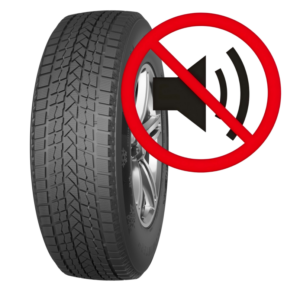
This research strives to enhance the safety of multi-piece wheel assemblies as injuries and fatalities are associated with their failure, yet information on this topic is limited.Experiments were performed to determine mechanical performance and planar deformation characteristics of several tires to aid in numerical model development. For a 29.5-29 tire, observations included determining vertical versus […]
Discover More