
By TNREDITOR
01 Nov, 2025
Race tires are the Formula 1 cars of the tire world. They are engineered for one primary purpose: speed. If you’ve ever wondered why race cars seem to stick to the track like glue, it’s largely thanks to these specialized tires. In this article, we’ll learn together knowledge about race tires.
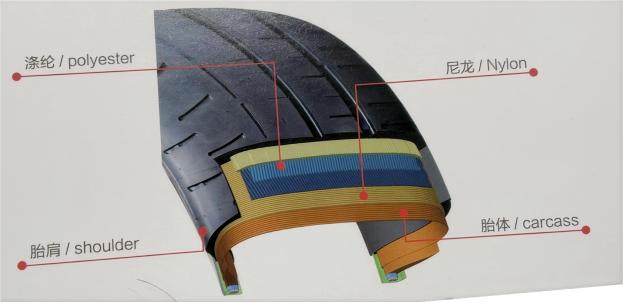
The trade-off between grip and durability is a central theme in the world of race tires. To achieve it, race tires have to be crafted from a distinct blend of rubber compounds compared to regular tires. The racing tires do not use the steel wire commonly used in ordinary tires. The tires used in the competition are entirely made of nylon and polyester fibers with a complex structure. They can withstand 4 to 5 g of acceleration speed and super during running. That’s why it also wears out much faster than standard tires.

Unlike the intricate tread patterns on regular tires that help with water dispersion and grip on various surfaces, race tires have minimal or even no tread pattern at all. This might seem counter intuitive, but it’s because race tracks are typically dry and smooth. The lack of tread increases the contact patch of the tire, enhancing grip and responsiveness.
Now let’s delve deeper into the various tire patterns you might encounter in racing. These patterns play a pivotal role in how a race car handles on the track. Here, we‘ll explore the key differences between directional, symmetric, and asymmetric race tire patterns.
Directional race tire patterns are designed with a clear tread pattern that resembles an arrow. The idea is to channel water away from the center of the tire to prevent hydroplaning in wet conditions. These tires are optimized for races where water is a significant factor, such as in some endurance racing events.
One notable characteristic of directional tires is that they are specific to either the left or right side of the vehicle. This specialization allows for efficient water dispersion during high-speed cornering. In some cases, teams may even use different compounds or patterns on each side to fine-tune performance.
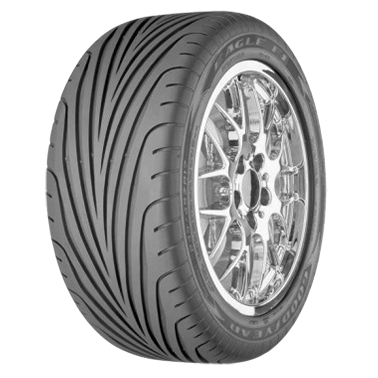
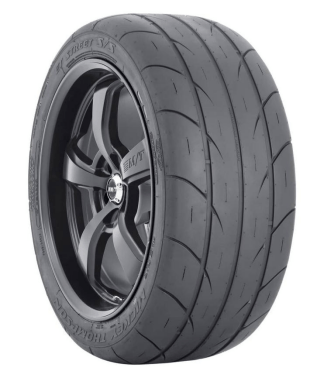
Symmetric race tire patterns have a uniform tread design across the entire tire surface. Unlike directional patterns, these tires can be mounted on either side of the vehicle without any concern for orientation. Symmetric patterns are versatile and are often used in racing series where track conditions are consistent and water isn’t a significant factor.
The symmetrical design provides excellent stability and predictability, making these tires a popular choice for sprint races where precise handling and control are essential. However, they may not perform as well as directional or asymmetric patterns in wet conditions.
Asymmetric race tire patterns strike a balance between directional and symmetric designs. These tires have a distinct tread pattern on the inner and outer sections of the tire. The inner side typically features larger, deeper grooves for water dispersion, while the outer side has shallower grooves for dry grip.
Asymmetric patterns offer the best of both worlds, combining wet-weather performance with dry-weather grip. This makes them a preferred choice in racing series where variable weather conditions are common, as they can adapt to the track surface effectively.
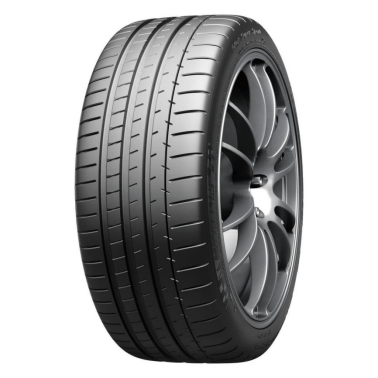
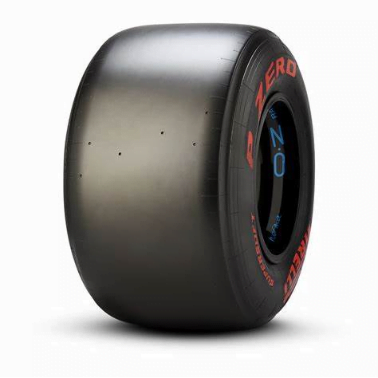
In addition to these three patterns, it’s worth mentioning slick tires. Slick tires have no tread patterns at all and are entirely smooth. They are designed exclusively for dry track conditions and provide the maximum possible contact area with the road. Slick tires offer unparalleled grip on a dry track but are virtually useless in wet conditions.
Although racing tires and ordinary car tires have some overlap in technological development and manufacturing processes, they are essentially two completely different products. When designing ordinary car tires, durability is more considered. Usually a set of tires can have a service life of more than 40,000 to 60,000 kilometers. When racing tires are designed, super performance is a crucial factor. Therefore, the life of official racing tires will not exceed 200 kilometers at most. Some amateurs also have the more economical option of practice racing tires – their service life can be 400 kilometers.

Racing generates a lot of heat, and this applies to tires as well. To combat overheating, race tires often have unique features like heat-resistant compounds and special sidewall construction. Maintaining optimal tire temperature is essential for consistent performance on the track.
Race cars have specific camber and alignment settings, and the tires are designed to work optimally with these settings. Camber refers to the angle at which the tire contacts the road. Race tires are engineered to perform best within these specific angles, further enhancing grip during turns.
Here are some common specifications for racing tires.
| Slick tire | ||
| 180/550R13 | 190/580R15 | 280/660R18 |
| 240/570R13 | 245/620R17 | 300/660R18 |
| 200/580R15 | 245/645R18 | 300/680R18 |
| 240/610R17 | 265/645R18 | 285/645R18 |
| Other pattern | ||
| 195/50R15 | 225/45R17 | 235/45R17 |
| 235/40R18 | 245/40R18 | 255/35R18 |
| 265/35R18 | 285/35R18 | 235/35R19 |
| 245/35R19 | 265/30R19 | 285/35R19 |
It is worth mentioning that Slick tires and other race tires have different specification.
Let’s take the 180/550R13 as an example
Let’s take the 195/50R15 as an example
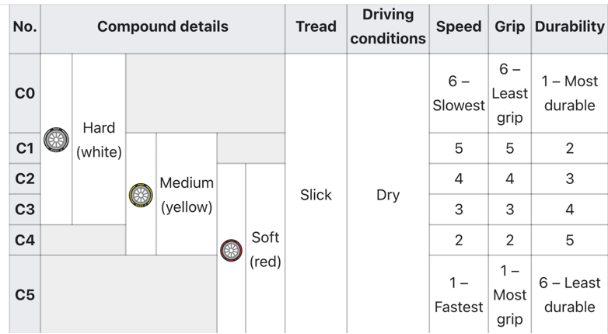
Some racing series allow teams to use multiple tire compounds in a single race. These compounds vary in hardness and grip. Teams strategically choose which compound to use based on track conditions, weather, and race strategy. It adds an extra layer of complexity and decision-making to the race.
There is a table related to different compounds as following shows
When it comes to racing tires, nine brands have to be mentioned – Dunlop, Pirelli, Goodyear, Michelin, Bridgestone, AVON, Continental, ENGLEBERT and Fire -stone). Only these 9 brands have ever carried F1 cars (the highest scale competition in the racing field) on the track.
Among these nine brands, Goodyear achieved staged victory. But now, it’s clear that the king of racing tires is Pirelli.
This Italian tire manufacturer has a rich history, an impressive turnover, and some fascinating facts that make it a standout choice for many racing teams.
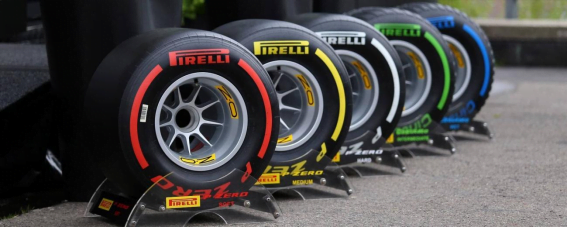
Pirelli is known for pushing the boundaries of tire technology. They introduced colored sidewalls for different tire compounds in Formula 1, making it easier for viewers to identify which tires each car is using during a race. This small innovation had a significant impact on the sport’s visual appeal.

Finally, race tire technology is in a constant state of evolution. Tire manufacturers work closely with racing teams to develop new compounds, constructions, and designs that push the boundaries of what’s possible. This relentless pursuit of improvement is what keeps race tires at the cutting edge of performance.
With passage of time, some Chinese tire manufacturers have also begun to make certain progress in the field of racing tire manufacturing. The tyres they produced also began to make their mark in international motorsport competitions. TNR, as a professional tire supplier, aims to provide more affordable racing tires that meet your needs.
As vehicle cabins become quieter, tire noise has become one of the main sources of unwanted sound, especially at medium and high speeds. Noise-reducing tires are developed to address this issue directly at the tire–road interface, where most road noise is generated. Decibel scale: from quiet to road noise (Source: Continental) Where Tire Noise Comes FromFrom […]
Discover More
This research strives to enhance the safety of multi-piece wheel assemblies as injuries and fatalities are associated with their failure, yet information on this topic is limited.Experiments were performed to determine mechanical performance and planar deformation characteristics of several tires to aid in numerical model development. For a 29.5-29 tire, observations included determining vertical versus […]
Discover More