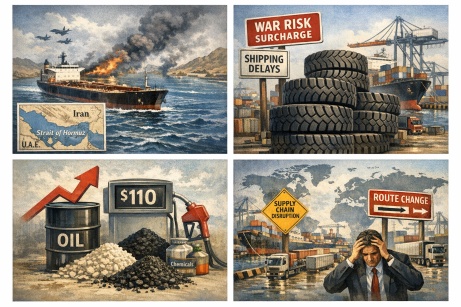
In global trade, disruptions rarely arrive quietly. They ripple—through oil markets, shipping lanes, insurance premiums, and ultimately, into the pricing and availability of everyday industrial products. The latest tensions surrounding Iran are no exception. What may appear, at first glance, as a geopolitical conflict is in fact quietly redrawing the contours of global tyre trade.
For exporters and distributors alike, the question is no longer whether the conflict matters—but how deeply it will reshape the industry.
At the heart of the disruption lies geography. The Strait of Hormuz, a narrow maritime corridor through which a significant portion of the world’s oil supply flows, has once again become a focal point of uncertainty. When risk rises in such a critical artery, shipping does not stop—but it hesitates, reroutes, and becomes more expensive.
For Chinese tire exporters , including firms such as TNR international, this translates into immediate operational strain. Longer transit routes around Africa, reduced vessel availability, and port congestion combine to stretch delivery timelines. What was once a predictable 30–40 day shipment can now become an uncertain logistical gamble.
In trade, predictability is often more valuable than speed. And predictability, for now, is in short supply.
Iranian clients, once regular trading partners, are increasingly difficult to reach. Communication has become sporadic, and in some cases, has ceased entirely.
War rarely stays confined to battlefields; it travels swiftly into commodity markets. Oil prices, sensitive to Middle Eastern instability, tend to rise in response. For the tyre industry, this is particularly consequential.
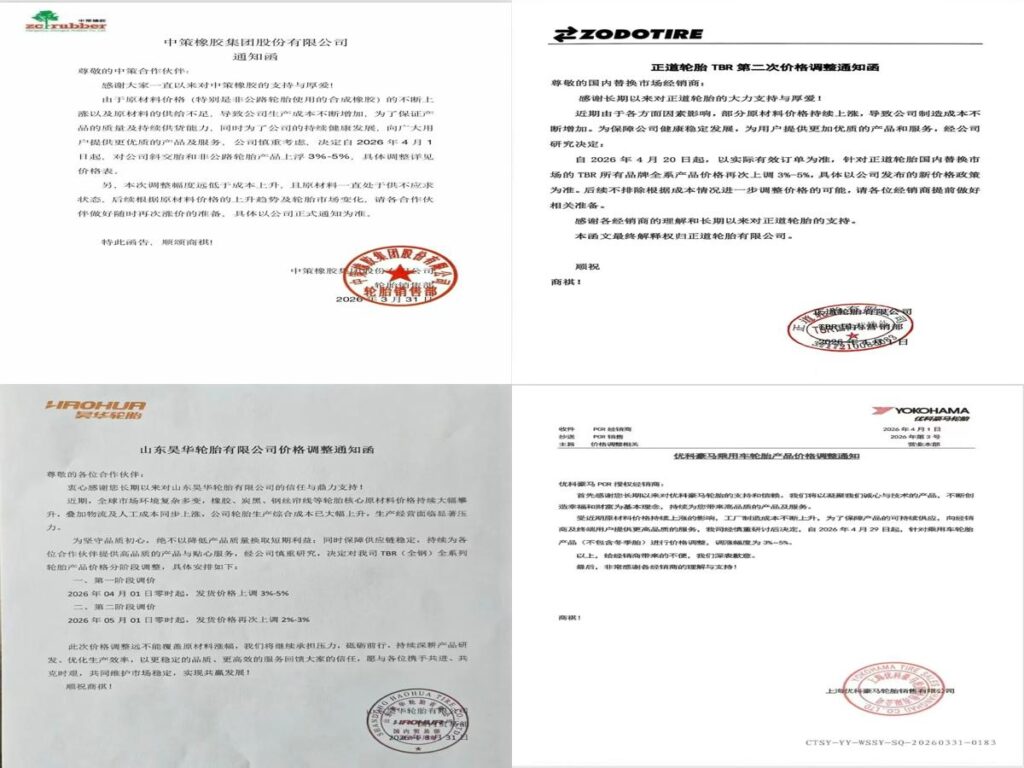
In regions directly affected by instability—particularly parts of the Middle East—economic activity often slows. Infrastructure projects are delayed, mining operations scale back, and capital expenditure is postponed.
For tire exporters, this means reduced demand in markets. In times of uncertainty, customers do not always buy less—they buy differently.
Perhaps the most profound impact of the conflict is not on cost or demand alone, but on the nature of competition itself.
In stable periods, the tyre trade—like many commodity-linked industries—tends to revolve around price. Margins are thin, and efficiency is paramount. But when supply chains become volatile, the hierarchy of value changes.
Reliability begins to outweigh price.
Exporters capable of navigating disrupted logistics, securing stable supply, and communicating transparently with clients find themselves at a distinct advantage.
The Iran conflict, while rooted in geopolitics, is steadily influencing the mechanics of global trade—from oil prices to ocean freight, and from factory floors to customer purchasing decisions.For those in the tyre business, the message is clear. The question is no longer how to compete on price alone, but how to operate in a world where uncertainty is the new constant.
In such a world, the most valuable asset is not the cheapest product—but the ability to deliver it, reliably, when it matters most.