Working at height or reaching areas that are difficult to access is a common challenge in construction, installation, and maintenance work.
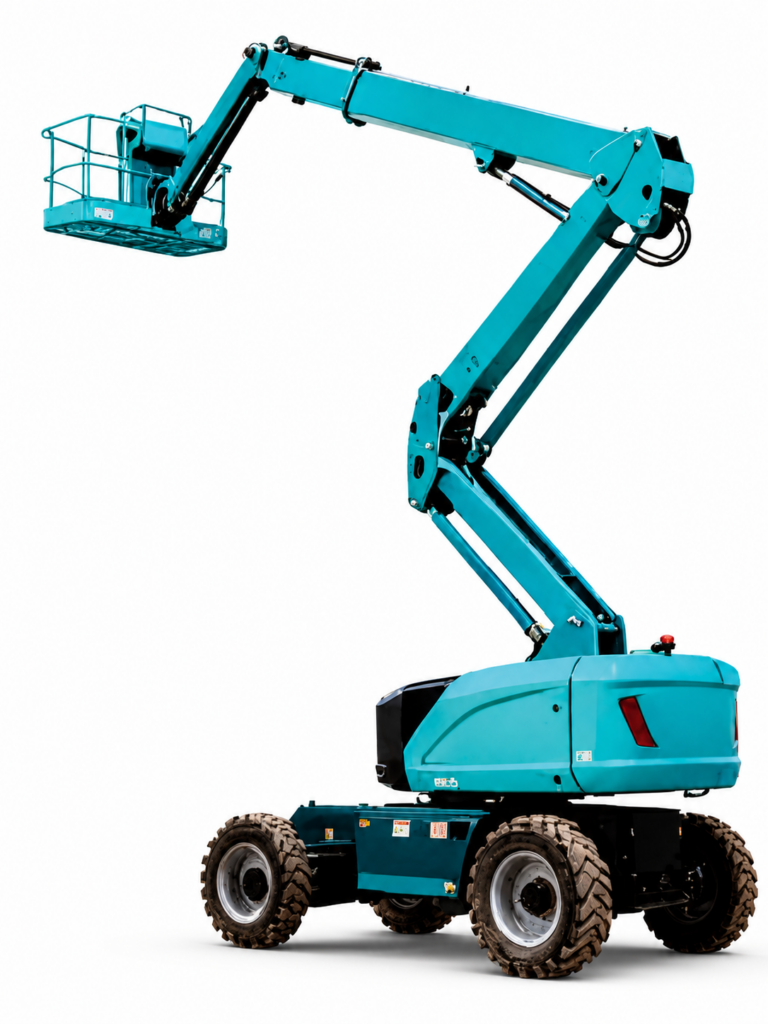
AWP (Aerial Works Platform; the term MEWP, meaning Mobile Elevating Work Platform, is also commonly used in current international industry standards. ) Provide a practical solution by allowing workers to safely reach elevated work areas. There are different types of AWP available, with boom lifts and scissor lifts being two of the most commonly used.
Although both are designed to provide access at height, boom lifts and scissor lifts differ significantly in their structure, movement, and working capabilities.
AWP tires are mainly available in two types: AWP solid tires and AWP foam-filled tires.
AWP solid tires·Scissor Lifts
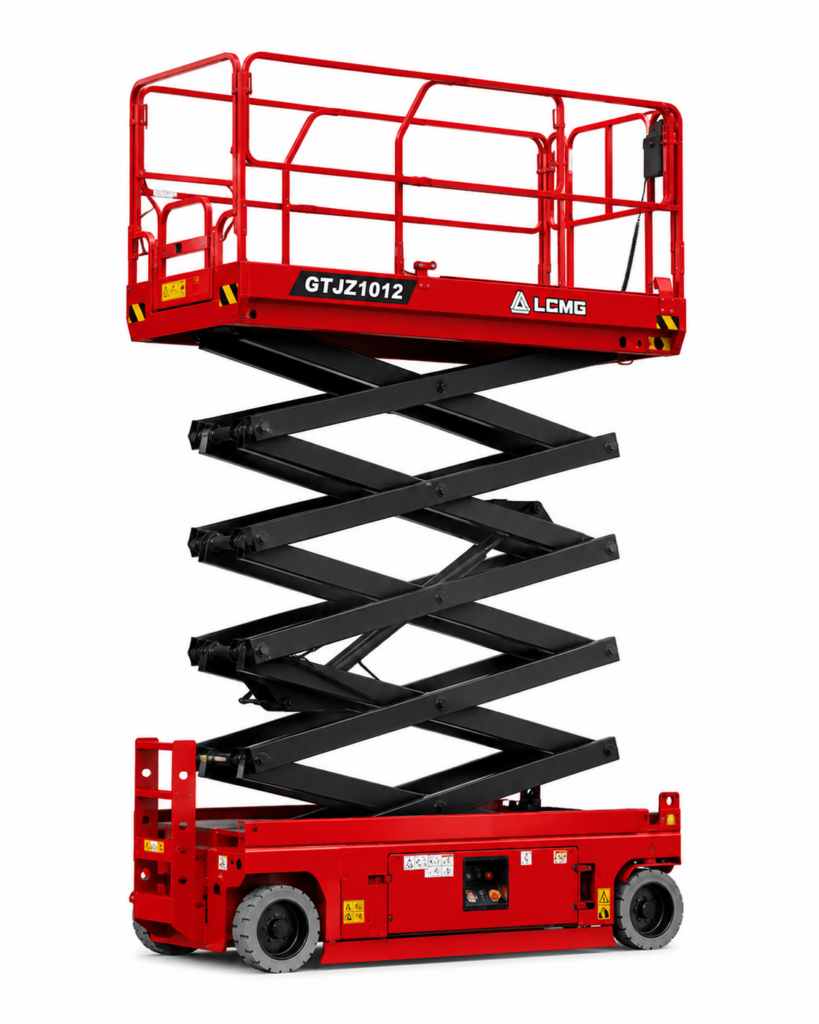
Ascissor lift is one of the most common types of mobile elevating work platforms. It uses a crisscrossing support structure to raise and lower the work platform, allowing workers and equipment to reach elevated areas safely.
Scissor lifts are a classification of manlift often found in construction and facility maintenance applications designed to elevate workers and their tools to working heights ranging from 19 ft (5.9 m) to 59 ft (17.9 m).
Common sizes include:
Imperial Size
Metric Size
9 × 3.15
230 × 80 mm
10 × 3.15
250 × 80 mm
9 × 4
230 × 100 mm
10 × 3
254 × 76 mm
11 × 3
280 × 76 mm
12 × 4
305 × 100 mm
12 × 4.5
305 × 114 mm
12 3/4 × 4
323 × 100 mm
14 × 4.5
355 × 115 mm
15 × 5
381 × 127 mm
16 × 5
406 × 127 mm
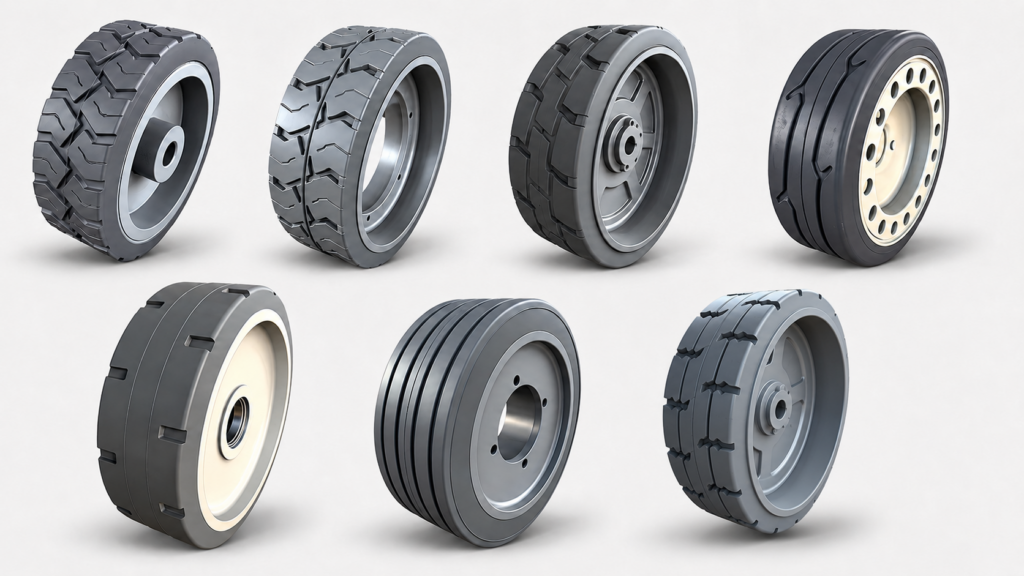
Different tread patterns and wheel designs are available depending on the tire size and machine model. Suitable for many popular scissor lift brands, including: JLG, Genie, XCMG, Zoomlion, Dingli, Sinoboom, Skyjack, Snorkel, Sunward, LGMG, Mantall, Upright and others. Here are some common tread patterns for scissor lift tires.
Boom Lifts
Boom lifts can be further divided into articulated boom lifts and arm boom lifts.
Articulated Arm Vehicles
Imperial Size
Metric Size
18 × 7
457 × 177 mm
25.6 × 7
650 × 177 mm
25 × 6.75
650 × 190 mm
25 × 7-12/5.0
635 × 177 mm
22 × 6 × 27 1/8
559 × 152 mm
—
600 × 190 mm
22 × 9 × 15 1/2
559 × 228 mm
These sizes are available for a wide range of articulated boom lifts. Suitable for many popular brands, including Genie, Haulotte, JLG, Hangcha, Manitou, and others. Here are some common tread patterns for articulated arm vehicle tires.
Straight Arm Vehicles
Imperial Size
Imperial Size
22 × 7 × 17 3/4
250-15
28 × 9-15
445/65-24
385/65-24
36 × 14-20
36 × 16-20
33 × 12-20
30 × 10-20
30 × 10-16
18-24
15-24
355/55-24
315/55-20
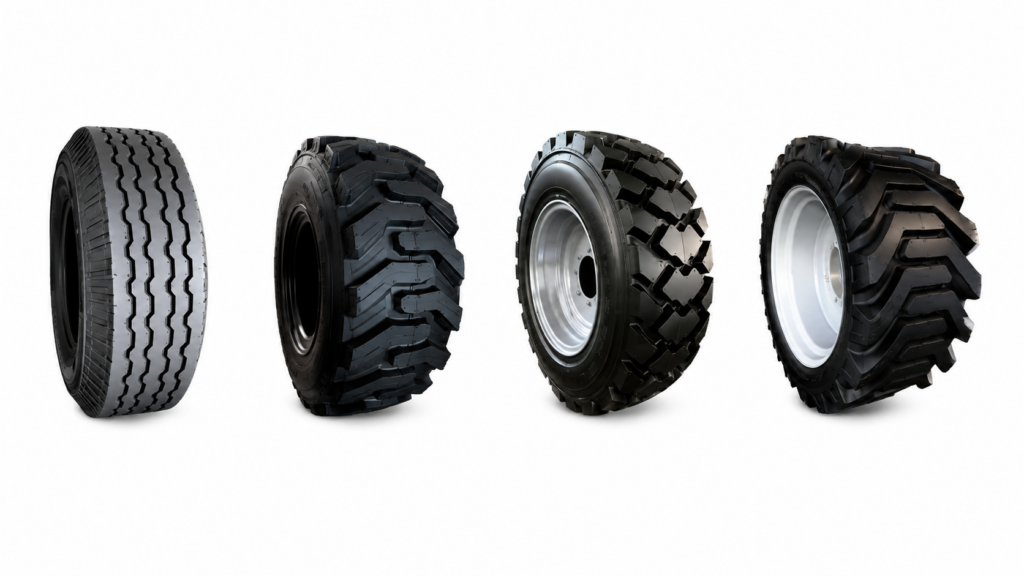
For straight boom lifts, reliable tires are essential for stable operation on demanding job sites. Our tires are suitable for many popular brands, including Genie, JLG, XCMG, Sunward, Roshow, and others. Here are some common tread patterns for straight boom lift tires.
AWP foam-filled tires
While solid tires offer excellent durability, puncture resistance and load-bearing capacity, they may not be the best choice for every working condition. For applications where better cushioning, ride comfort and flexibility are required, foam-filled tires provide another practical solution. They combine the puncture-free advantage of solid tires with some of the cushioning characteristics of pneumatic tires. Therefore, foam-filled tires are also widely used on AWP equipment, especially for demanding outdoor applications.
AWP Foam-Filled Tire Size:
Size
Size
Size
Size
9-14.5
10-16.5
12-16.5
14-17.5
15-625
18-625
26×12-16.5
26×12D380
33×15.50-16.5
355/55D24.5 (14-24.5)
445/50D710
445/65D710
IN445/55D22
305-546 (12-22.5)A
305-546 (12-22.5)B
305-546 (12-21.5)A
305-546 (12-21.5)B
385/65D19.5 (15-19.5)
445/65D19.5 (18-19.5)
10.5/80-18
12.5/80-18
385/65D22.5 (15-22.5)
445/65D22.5 (18-22.5)
385/45-28
385/50D625 (15-625)A
385/50D625 (15-625)B
445/45D625 (18-625)A
445/45D625 (18-625)B
315/55D20
39×15-22.5 A
39×15-22.5 B
840×15.5-510
240/55D17.5
26×12-16.5
26×12D380
23×10.5-360
33×12D610
36×14D22.5
36×14D610
370/75-28
400/75-28
1300-24
1400-24
(For the above sizes, we can also produce non-marking tires.)
Common AWP Foam Filled Type Pattern:
For the same AWP model, foam-filled and solid tires may have different size designations, but they are matched according to overall dimensions, load capacity, and wheel mounting specifications to ensure proper fitment and machine stability.
Brand
Machine Model
Foam-Filled Tire Size
Solid Tire Size
JLG
800S
385/65D22.5
385/65-24
JLG
800AJ
15-19.5
385/65-24
JLG
860SJ
15-19.5
385/65-24
JLG
18RSJ
315/55D20
33×12-20
JLG
24RST
39/15-22.5
36×14-20
JLG
450JS
33×15.5-16.5
33×12-20
JLG
450AJ
355/55D625
36×14-20
JLG
600AJ
14-17.5
36×14-20
JLG
600J
14-17.5
36×14-20
JLG
600SJ
14-17.5
36×14-20
JLG
600S
39/15-22.5
36×14-20
JLG
601LS
14-17.5
36×14-20
JLG
120SXJ
445/65D22.5
445/65-24
JLG
1250J
445/65D22.5
445/65-24
JLG
120 Old Model
445/65D22.5
445/65-24
JLG
110 Old Model
385/65D22.5
385/65-24
JLG
110 New Model / 1100SX
385/65D22.5
385/65-24
JLG
1350SJP
445/50D710
445/65-24
Genie
Z-45/25 & Z-45/25JDC
9×14.5
30×10-16
Genie
Z-60/37DC & FE
9×14.5
30×10-16
Genie
Z-135/70
355/55D625-14Ply
36×14-20
Genie
Z-34/22IC
445/65D22.5-18
445/65-24
Genie
Z-45/25RT-25JRT
9×14.5
30×10-16
Genie
Z-51/30JRT
315/55D20
33×12-20
Genie
Z-60/34
385/65D19.5-12
385/65-24
Genie
Z-62/40
355/55D625
36×14-20
Genie
Z-80/60
18-625NHS
385/65-24
Genie
S-40/S-45
12-16.5
33×12-20
Production Line
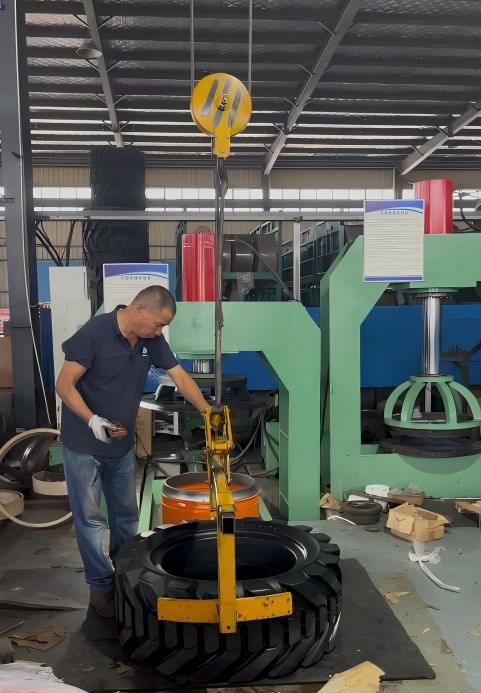
The AWP tire production process includes rubber preparation, tire building, molding and vulcanization, finishing, optional wheel assembly, final inspection, and packaging. Now, follow us as we take you through the AWP tire production process step by step from our factory.
Rubber Mixing and Sheeting
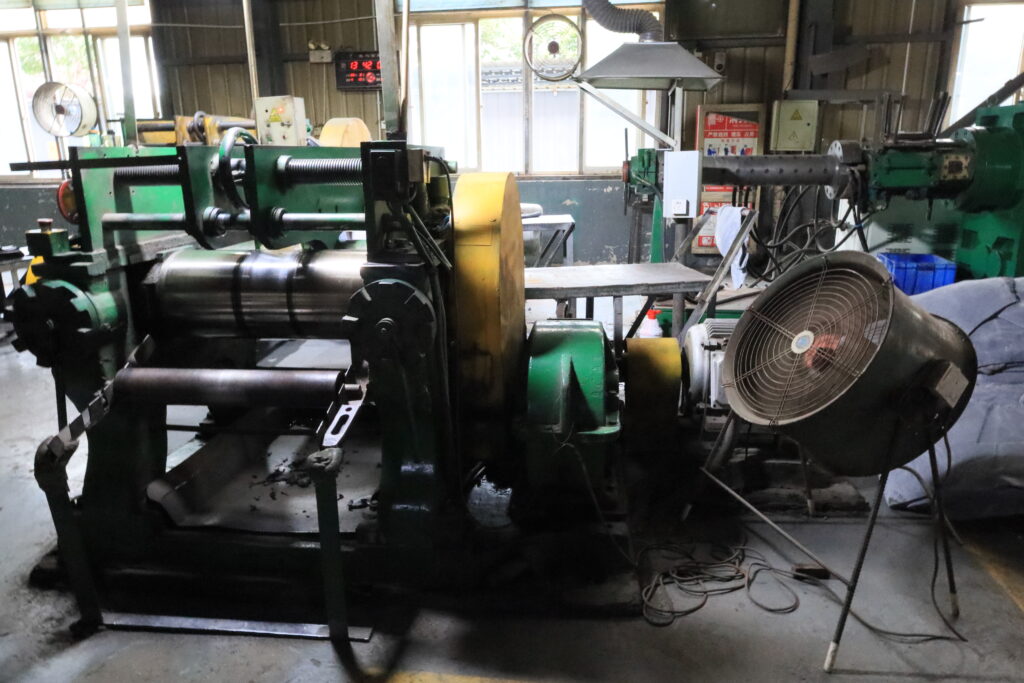
Rubber compound is processed between rollers to improve uniformity and form rubber sheets or strips for the next production stage.
Rubber Cutting and Preparing
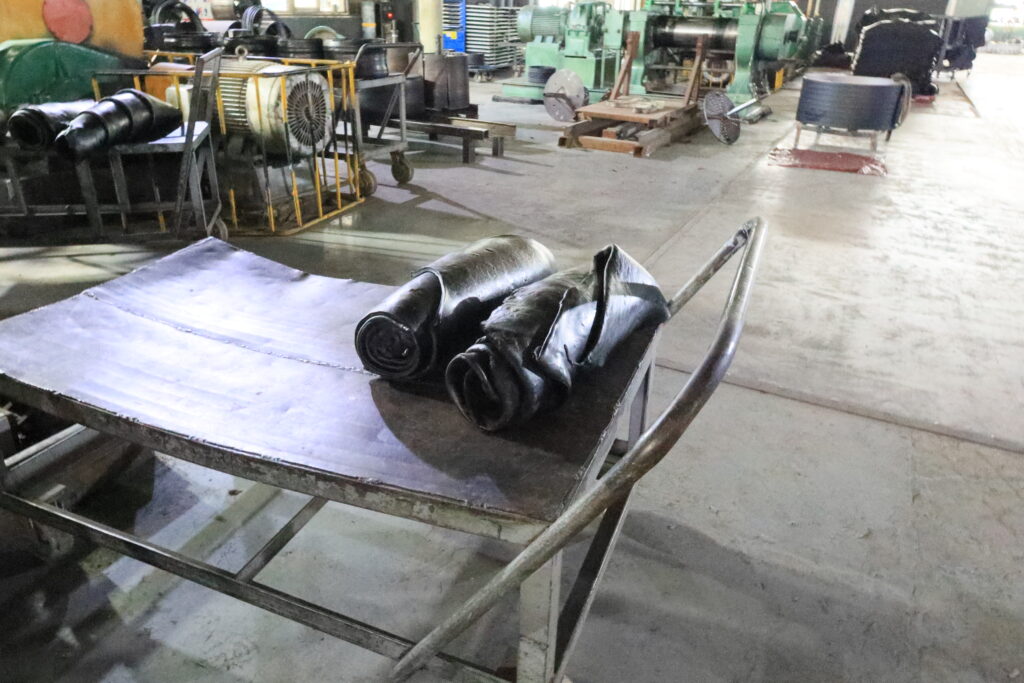
Rubber sheets or strips are cut, rolled, weighed, and prepared according to the required tire size and construction.
Tire Building/Rubber Winding
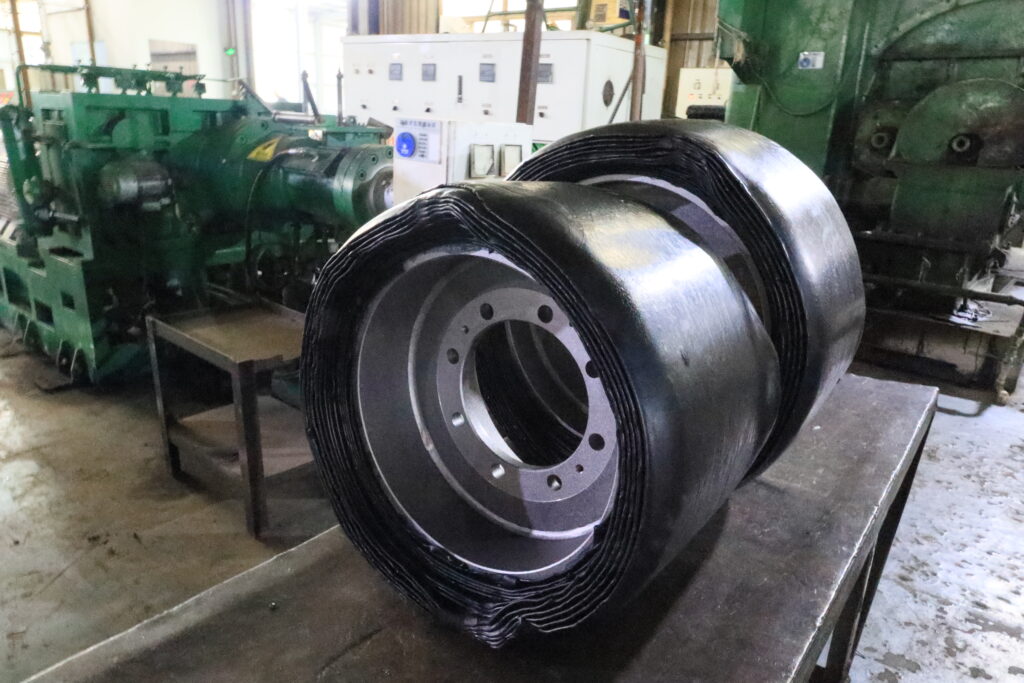
Rubber strips are continuously wound around a forming core or metal wheel center to build the required tire thickness.
The uncured rubber layers have been built around the metal wheel core. (Solid tires are mainly available in three structures, which differ in how the tire is connected to or mounted on the wheel. The pictures shows the production process of a mold-on tire.For more details, please refer to the Rim and Tyre Relationship below.)
Non-Marking Tire Preparation
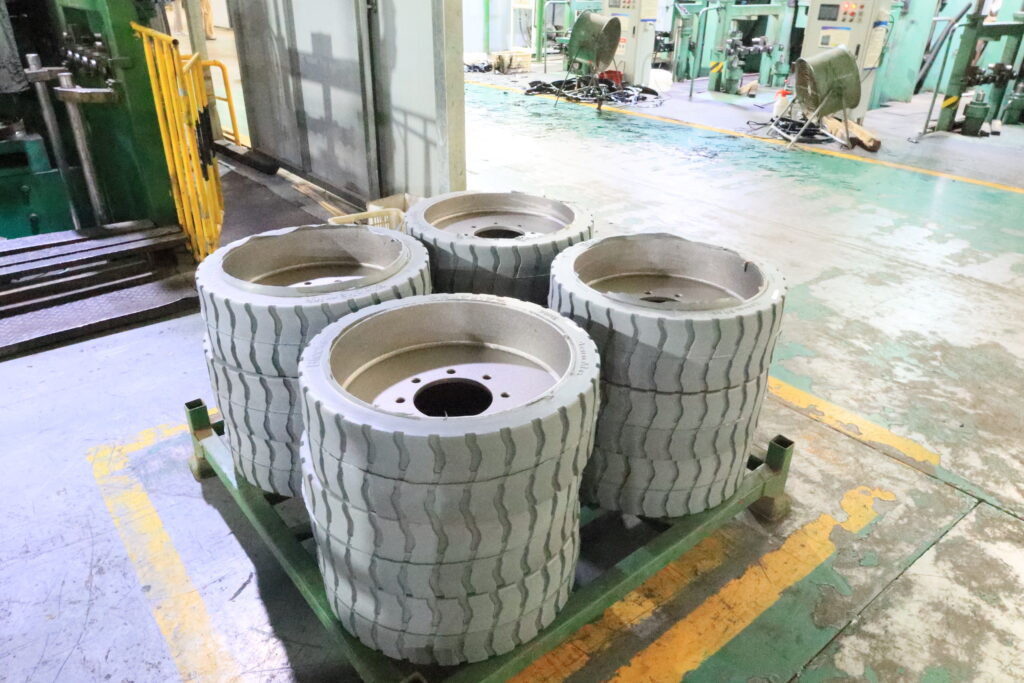
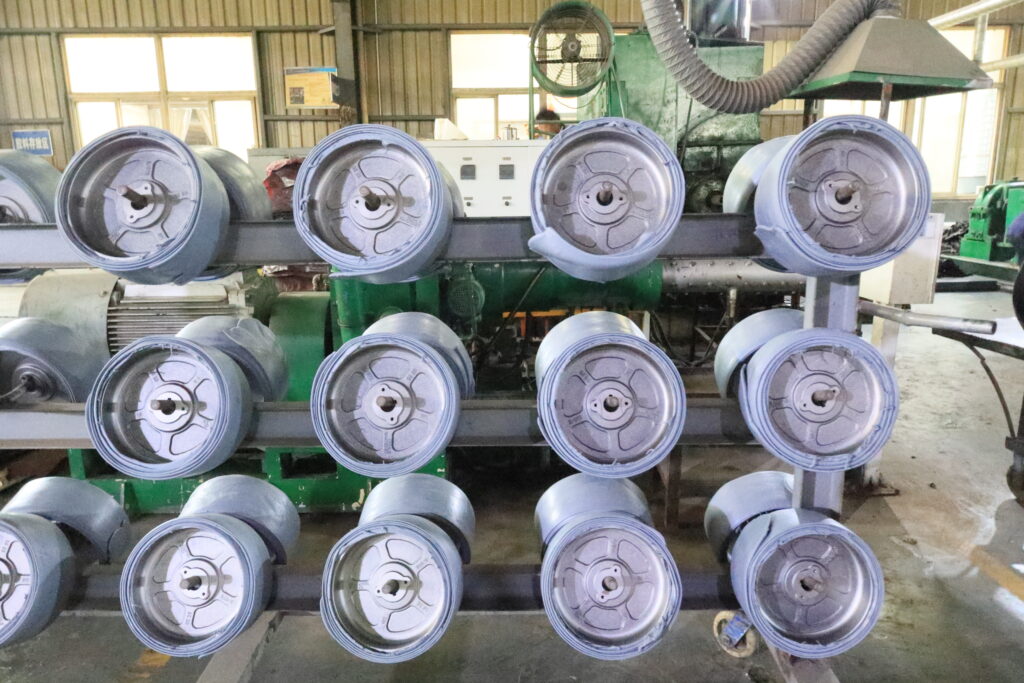
Gray non-marking rubber is built around the wheel core. The uncured tire blanks are waiting for the next molding or vulcanization process.
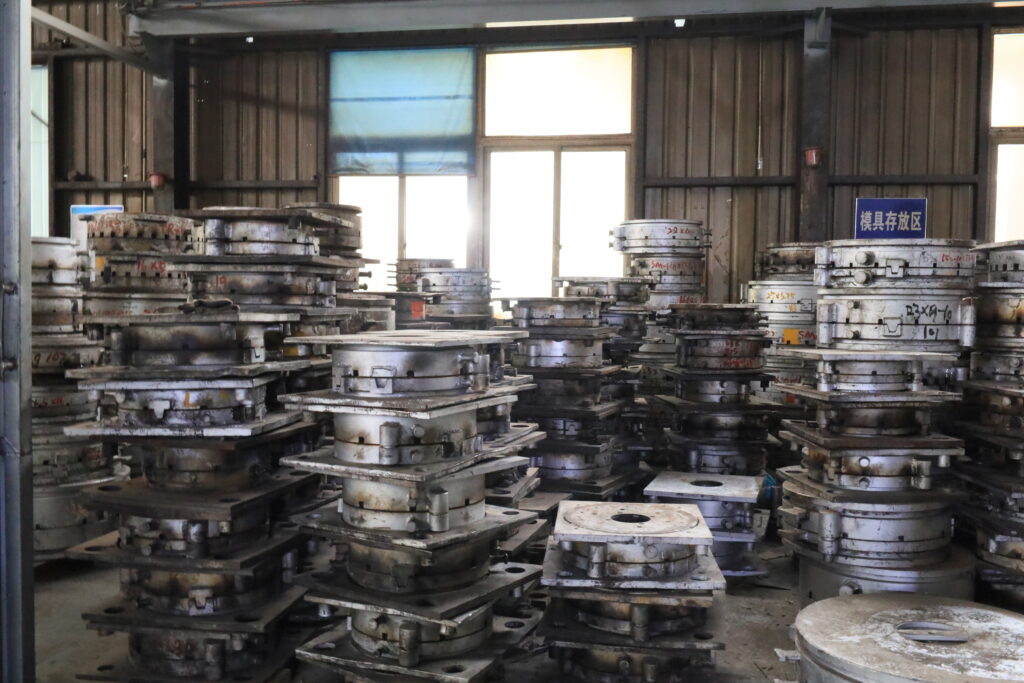
Mold Preparation
Tire molds of different sizes and tread patterns are selected, cleaned, inspected, preheated, and prepared for production.
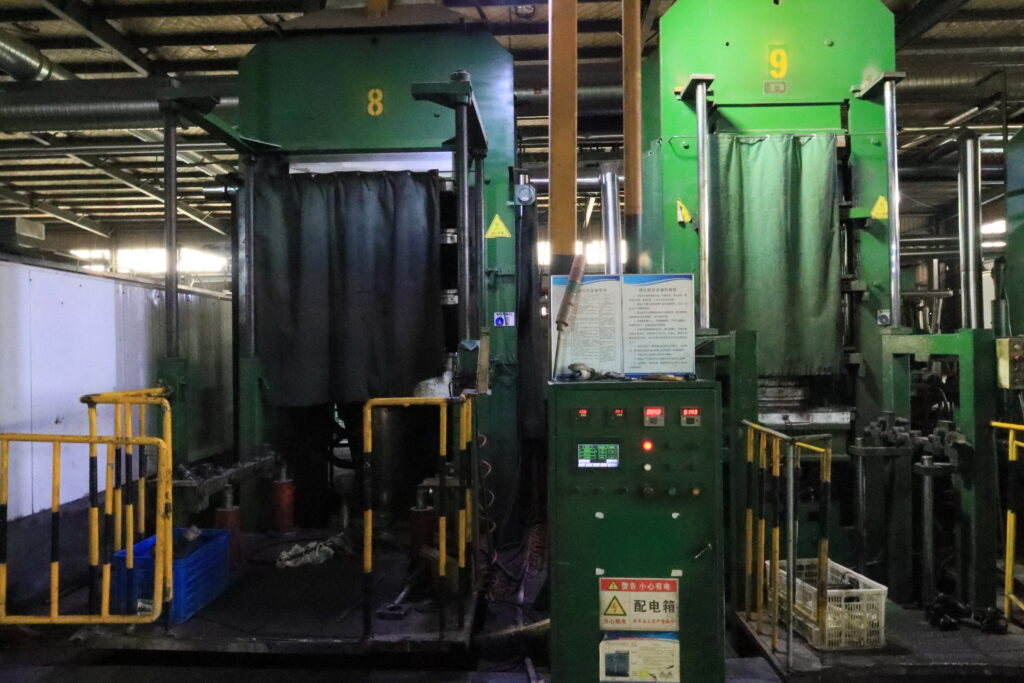
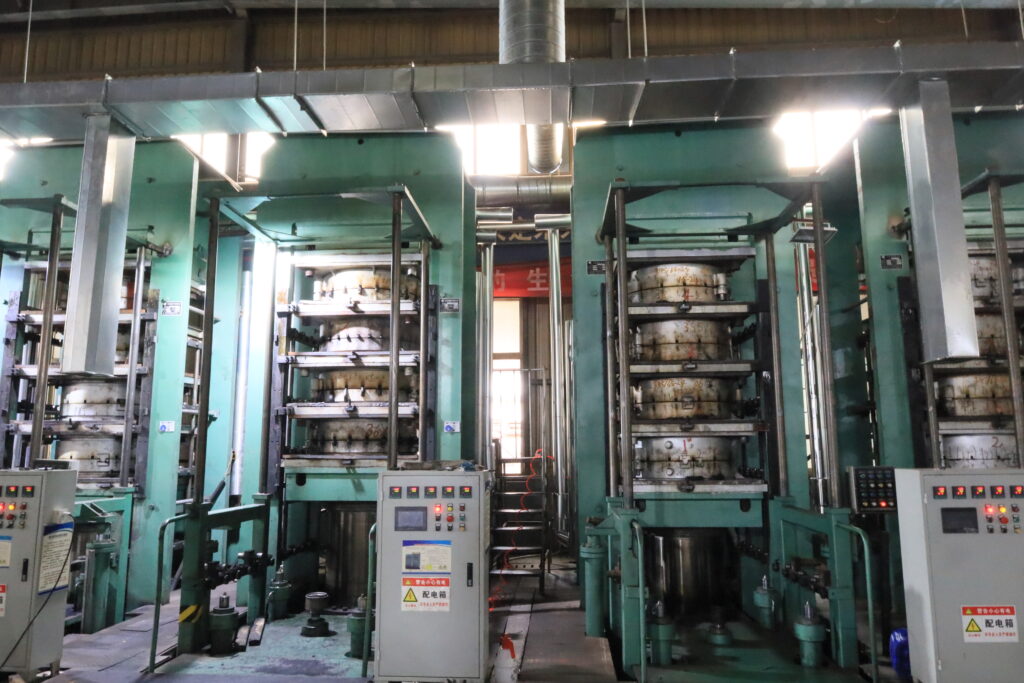
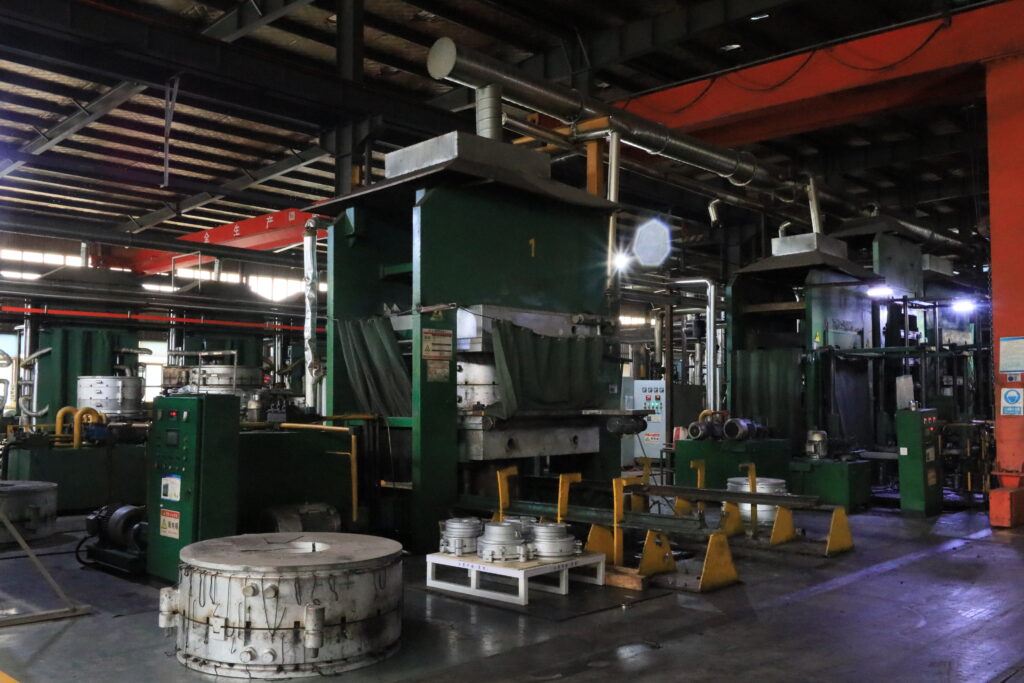
Compression Molding & Vulcanization
The tire is placed inside the mold and cured under controlled temperature, pressure, and time. This process forms the final tire shape and tread pattern
Wheel Assembly Handling
The tire has been installed on the steel rim. The completed wheel assembly is being moved to the inspection or storage area.
(This is the production process of a solid pneumatic tire.)
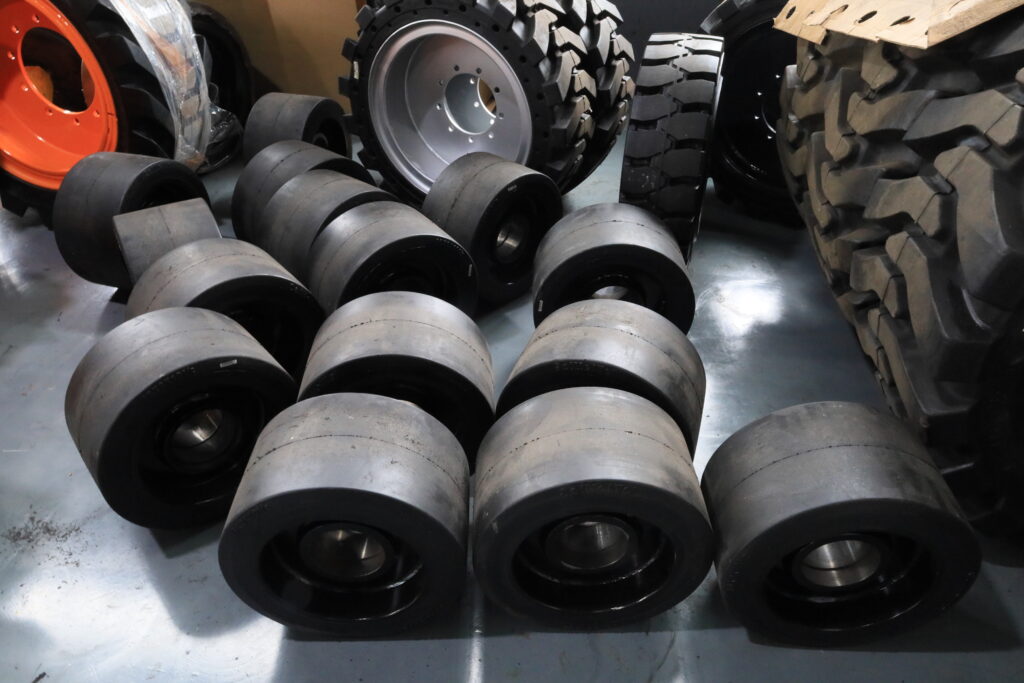
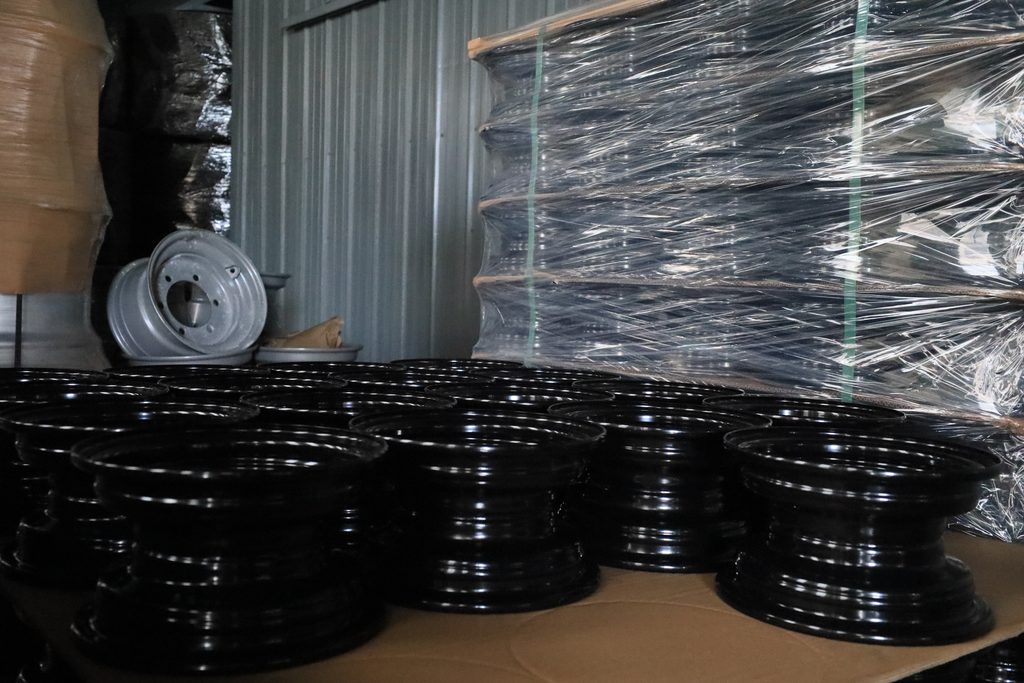
Finished Tire and Wheel Storage
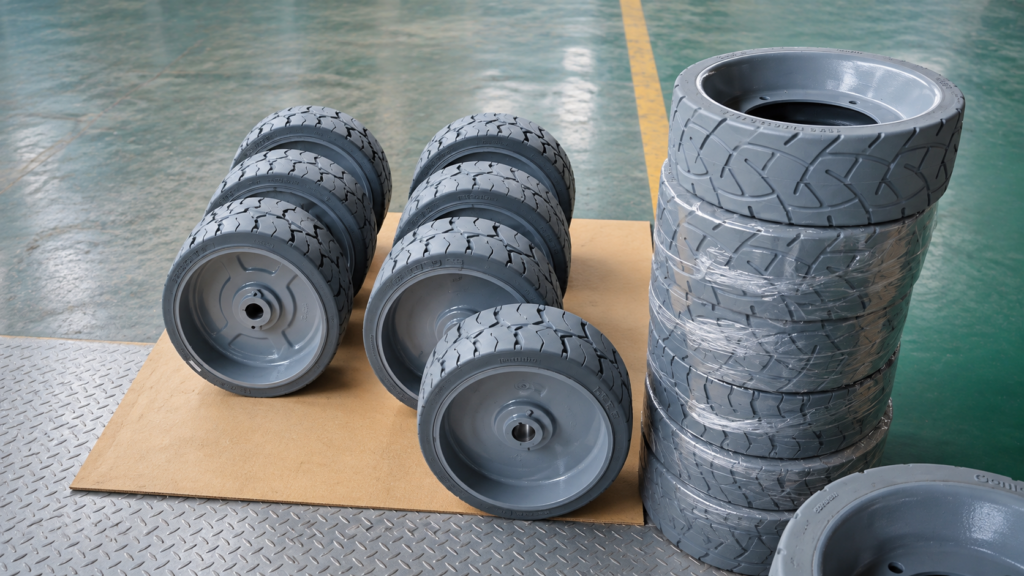
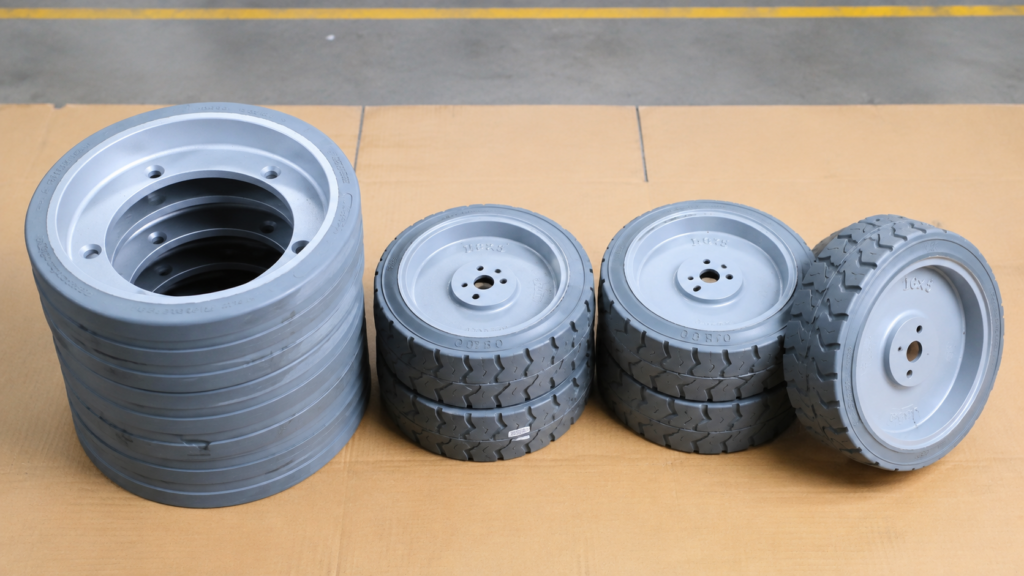
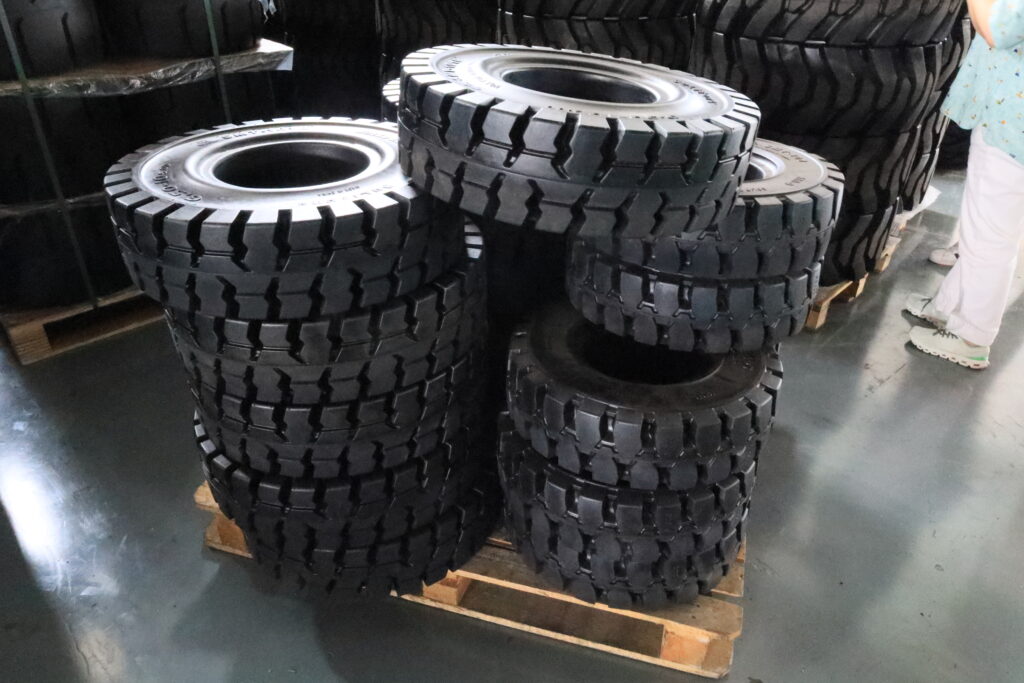
Completed industrial wheels, smooth solid tires, and treaded solid tires are sorted and temporarily stored before final inspection or shipment
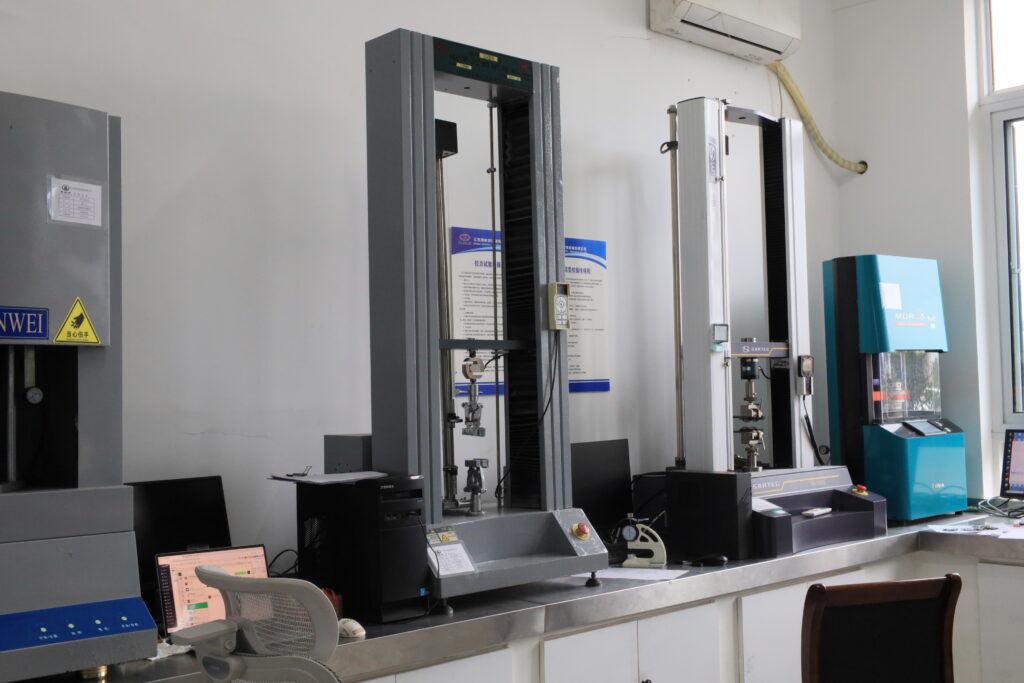
Testing equipment
Testing equipment is used to measure curing characteristics, tensile strength, elongation, tear resistance, hardness, bonding strength, and other physical properties.
Relationship between Rim and Tyre of AWP
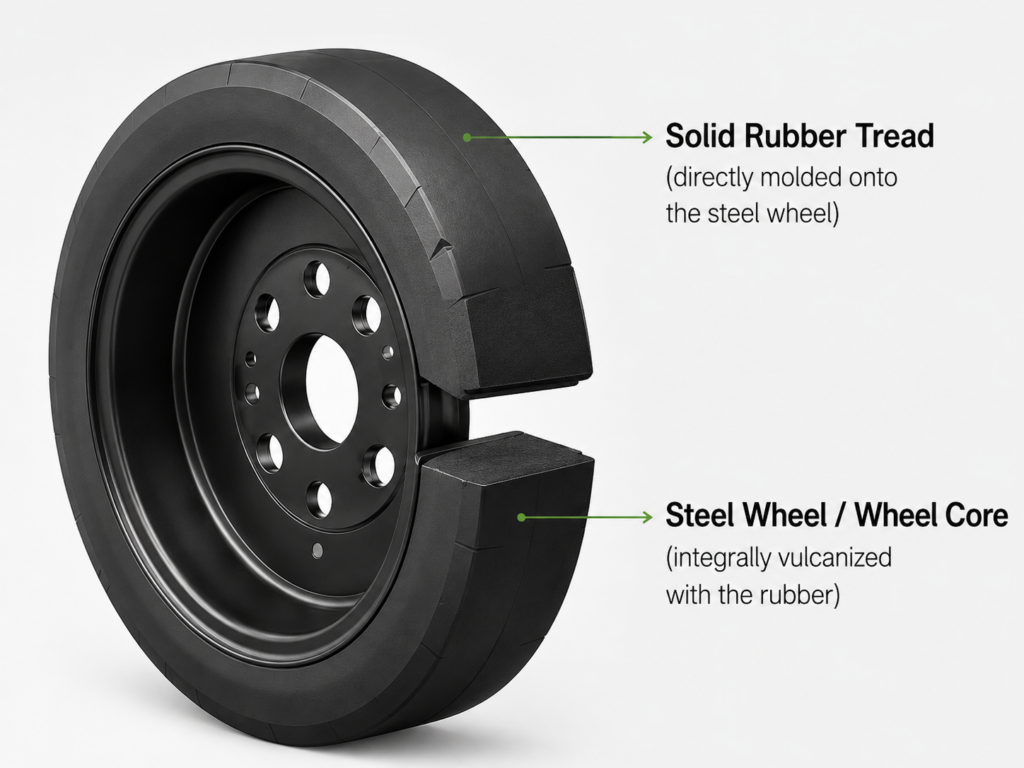
1. Mold-on Solid Tire – Tire and Wheel as One Unit
For mold-on solid tires, the rubber tire is directly molded and vulcanized onto the wheel. The tire and wheel are permanently bonded together and supplied as a complete assembly.
For AWP equipment, this means the customer normally installs or replaces the complete tire-and-wheel assembly, rather than replacing the rubber tire separately.
In simple words: the tire is bonded directly to the wheel — they work as one complete unit.
Following is the mold-on solid tire production photo:
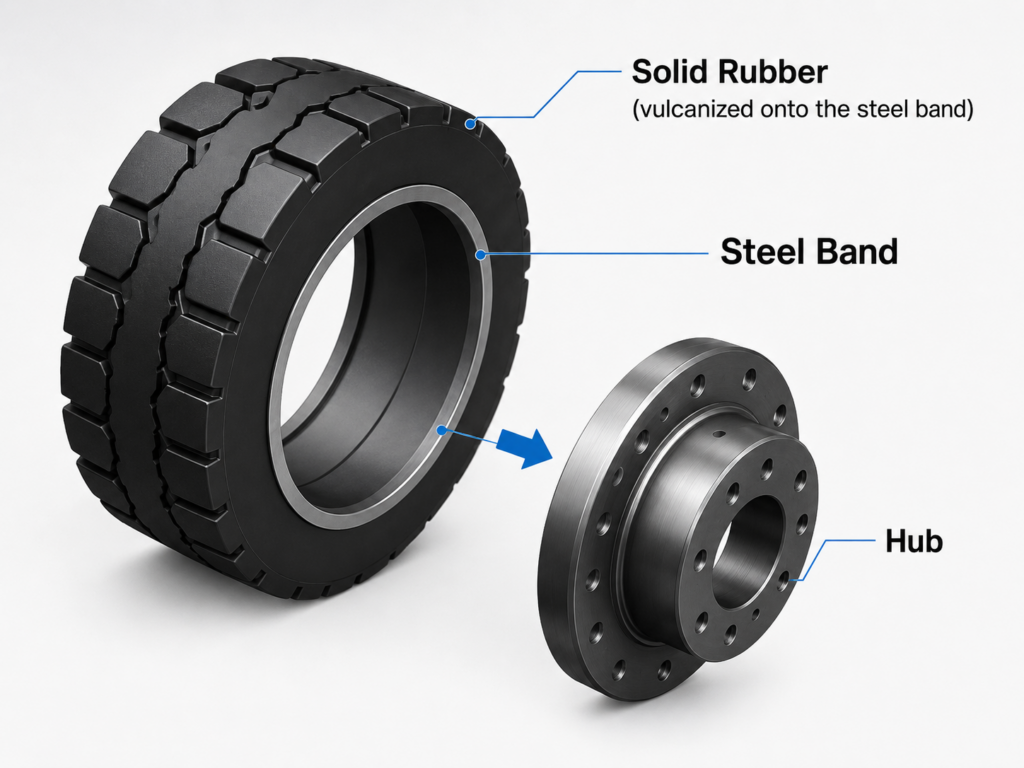
2. Press-on Solid Tire – Tire Pressed onto the Wheel
A press-on solid tire has a different structure. The solid rubber is vulcanized onto a steel band, forming a separate tire unit. This tire is then pressed onto the wheel/hub with a hydraulic press.
Unlike a mold-on tire, the tire and wheel are not permanently bonded together. When the tire is worn out, the old press-on tire can be removed and a new one pressed onto the existing wheel, provided the wheel is still suitable for use.
In simple words: the tire has its own steel band and is pressed onto the wheel.
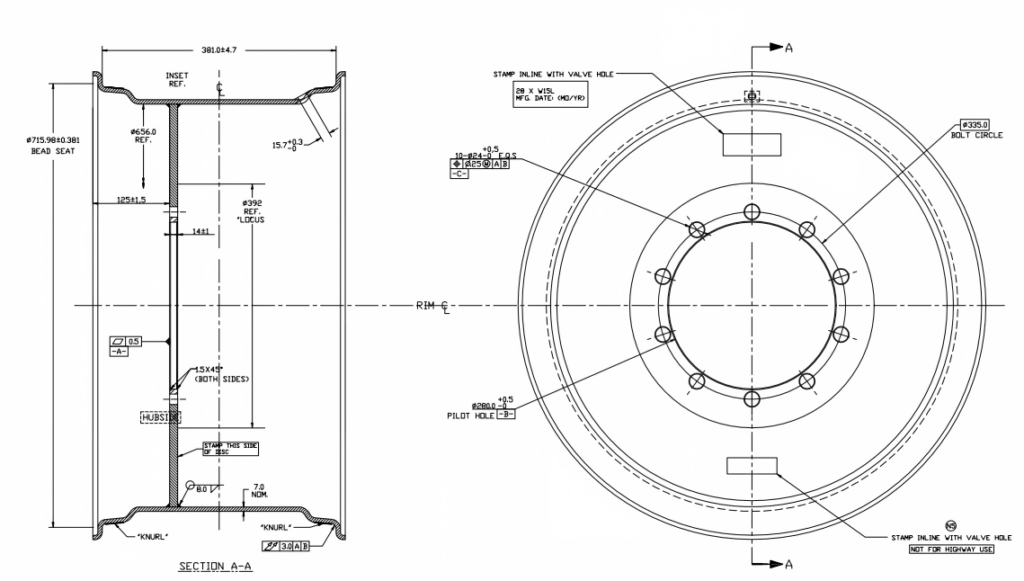
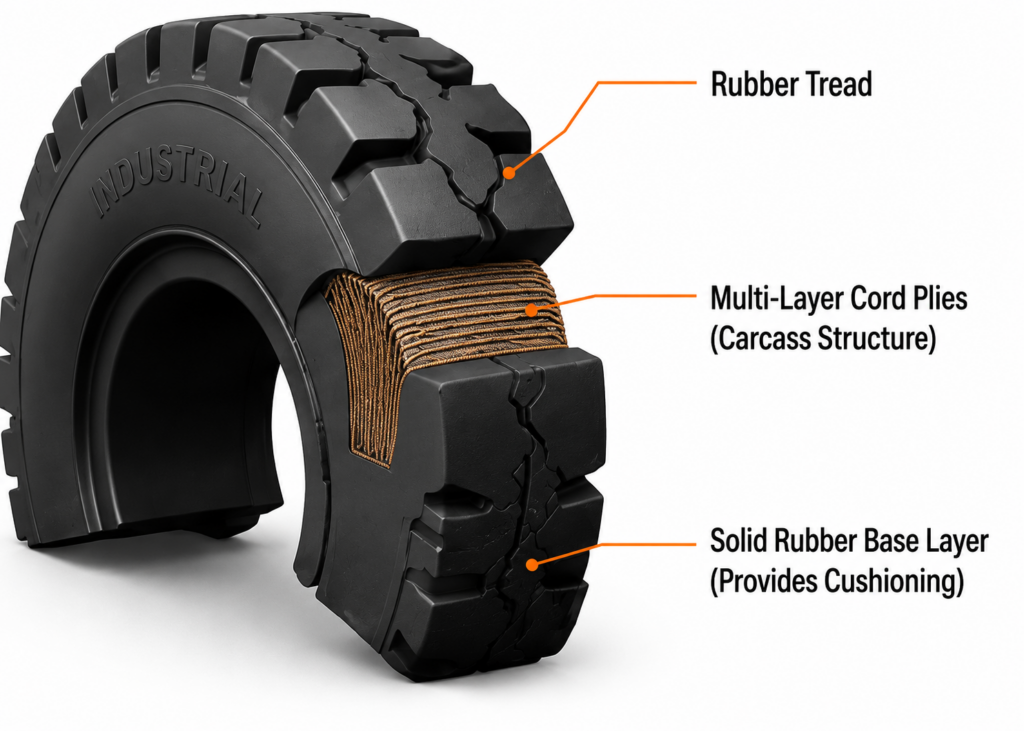
3. Solid Pneumatic Tire – Tire Mounted on the Rim
A solid pneumatic tire is designed more like a conventional pneumatic tire. It has its own complete tire structure, including multiple rubber layers and reinforcing fabric, and is mounted directly onto a suitable rim.
In this structure, the tire and rim are two separate components. The tire can be removed from the rim and replaced when necessary.
For AWP applications, this design provides the puncture-free advantage of a solid tire while offering better cushioning and flexibility than many other solid tire structures.
In simple words: the tire and rim are separate — the solid tire is mounted onto the rim like a conventional tire.
From scissor lifts to boom lifts, different types of AWP equipment have different tire requirements. Usually, we need to take common sizes, tread patterns, and machine models into consideration.Besides, we also need confirm whether soild or Foam-Filled . If it is solid tire, which structure do we need?As a professional supplier, we can recommend high-quality tires at competitive prices according to the customer’s machine model, tire size, and working conditions. Meanwhile, our complete production line and strict quality control help ensure stable product quality.